A room temperature log is an observation, not an energy audit
Record time, location and context so a temperature diary remains an honest observation rather than a claimed energy assessment.
Updated:
Choose a question the diary can answer
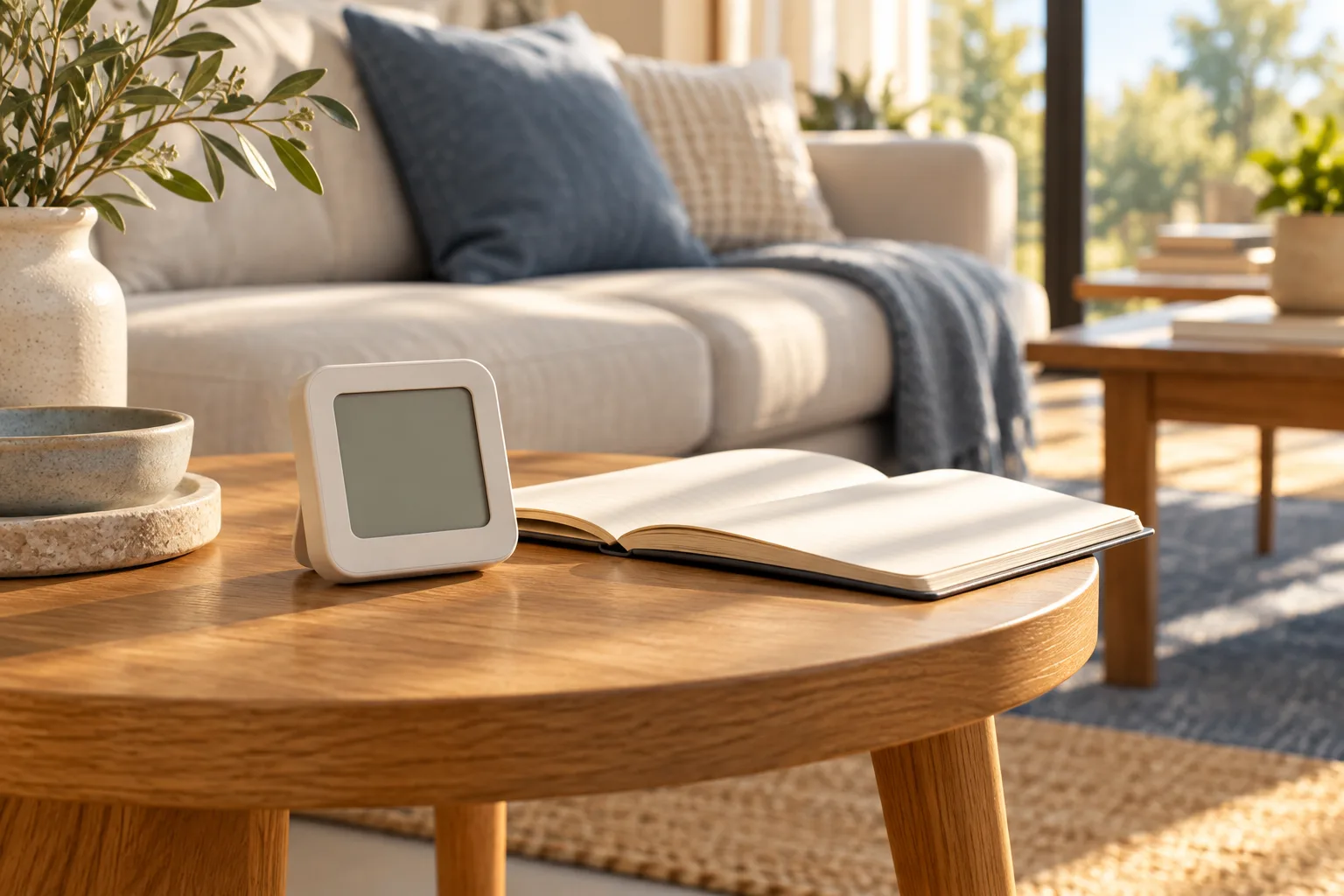
A room-temperature diary can help describe when a concern occurs. It cannot by itself identify every cause or quantify electricity savings. Start with a narrow question, such as whether the same corner feels different in the morning and afternoon. Use a suitable instrument according to its instructions and keep its identity in the record. Do not treat an unverified display as a calibrated reference. If the issue involves health, persistent dampness or the operation of heating equipment, the diary can support a conversation with the appropriate professional rather than replace that advice.
Keep the observation repeatable
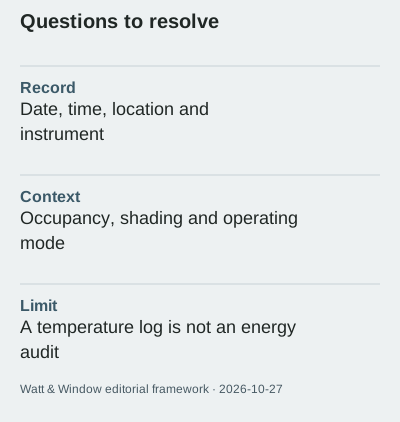
Record the date, time and location for each entry. Note any change in where the instrument sits, because a reading from one position is not automatically comparable with a reading from another. Follow the device instructions for placement and use; this article does not supply a universal placement rule. A small, consistent record is more useful than many disconnected numbers. Describe relevant circumstances in ordinary language, including whether the room was occupied and whether curtains or external shading were in their usual position. Leave unknown details marked as unknown instead of reconstructing them later.
Explain a difference without adding a claim
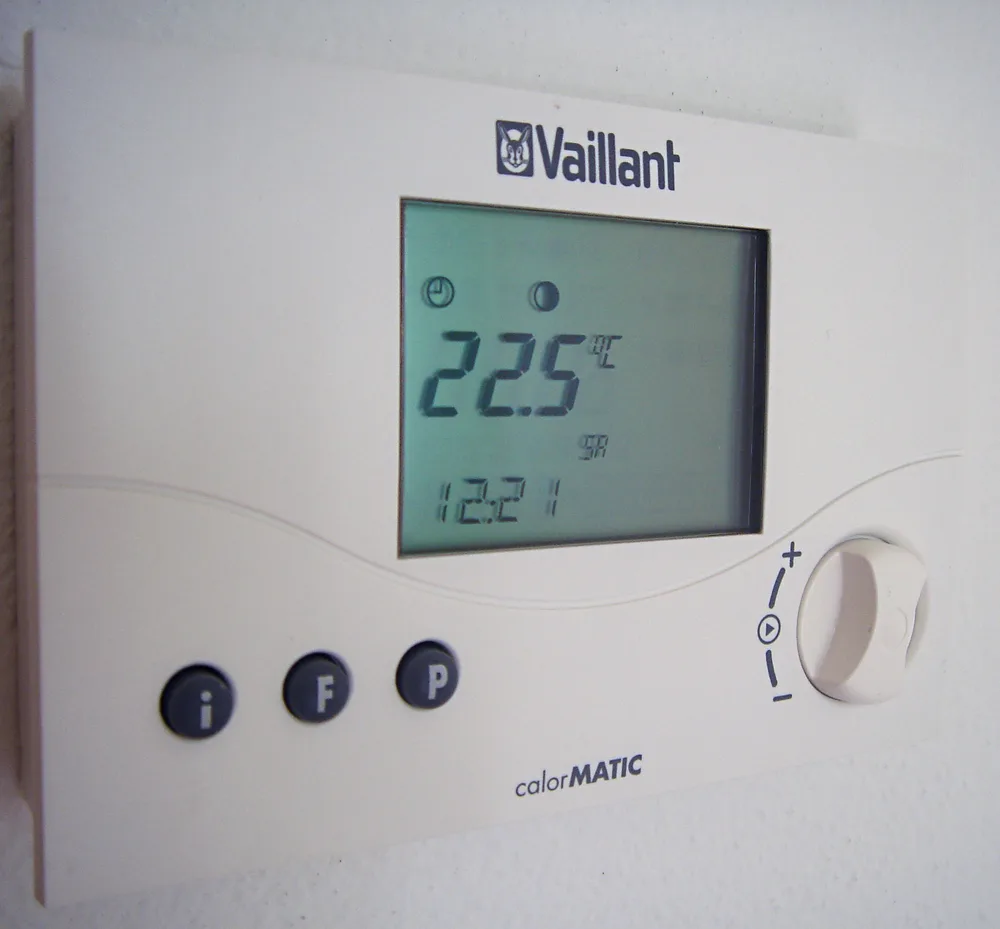
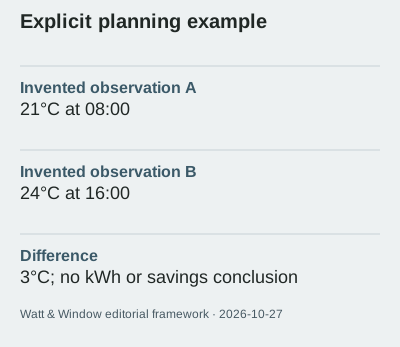
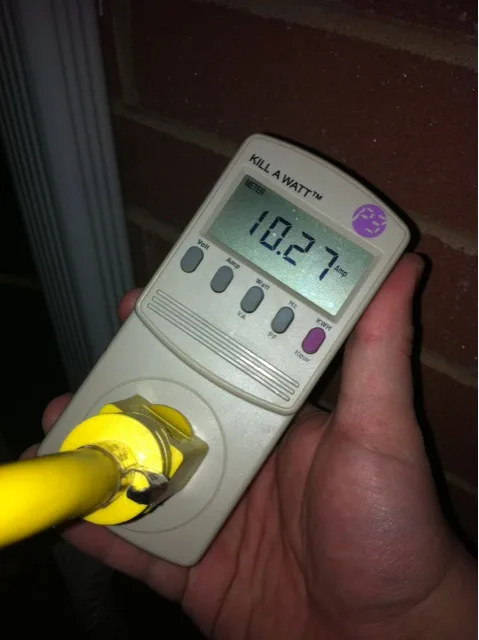
In an invented example, a display reads 21°C at 08:00 and 24°C at 16:00. The arithmetic difference is 3°C. Those numbers do not establish the energy consumed, the accuracy of the instrument or the cause of the change. Expressing the difference as a percentage would not make it a useful household savings measure. Keep the original readings and their context together. The thermostat photograph illustrates a temperature display, while the meter photograph illustrates an electrical unit. They answer different questions even when both appear as numbers on a small screen.
Include the room around the device
A note about sun, window coverings or an unusual period of occupancy can prevent an observation from being stripped of its context. The external light-shelf photograph shows one building feature that sits outside the glazing. It is not a model for your home, but it makes the broader point visible: room conditions are not described by a controller alone. Avoid assigning a cause from a photograph or one afternoon of readings. If you want advice about the building, provide the diary and a clear description of the room rather than a conclusion the evidence cannot yet support.

Do not turn a short log into an annual forecast
The WA energy-monitoring factsheet distinguishes devices that report electricity use from other observations. A temperature diary contains no automatic conversion into kilowatt-hours. Even a separate electricity record needs its period, scope and units identified. A claim such as 15% lower annual cost requires evidence beyond a few room readings. If a supplier uses your diary in a proposal, ask which conclusions it supports and which require further assessment. Keep modelled estimates clearly labelled, and do not present a supplier scenario as a measured outcome from your own home.
Save the record with its limits
Use a dated file and retain the instrument instructions and any relevant notes. Our source review date is 2026-10-27; the example readings in this guide are invented solely to explain the difference between observation and inference. No comfort threshold, medical recommendation or equipment diagnosis is supplied. A well-kept diary can help you ask a better question and notice what information is missing. That is a worthwhile result even when it does not identify a product to buy or produce a percentage that can be placed in a savings calculator.
Energy Policy WA — Monitor your energy use (August 2021) ? Australian Government — Heating and cooling ?