Three window ratings that answer different questions
Read three glazing measures without turning one favourable number into a promise about the whole home.
Updated:
Give each number its own job
A comparison sheet becomes confusing when every number is treated as a general efficiency score. Begin with three separate columns rather than a single winner column. Your Home explains U-value, solar heat gain coefficient and visible light transmittance as different properties. Keep the original label and units alongside each value copied from a supplier document. If a value is absent, write not supplied. An empty cell is useful information because it identifies a question for the supplier; an invented substitute makes the comparison look more complete while making it less reliable.
Read the scope of the rating
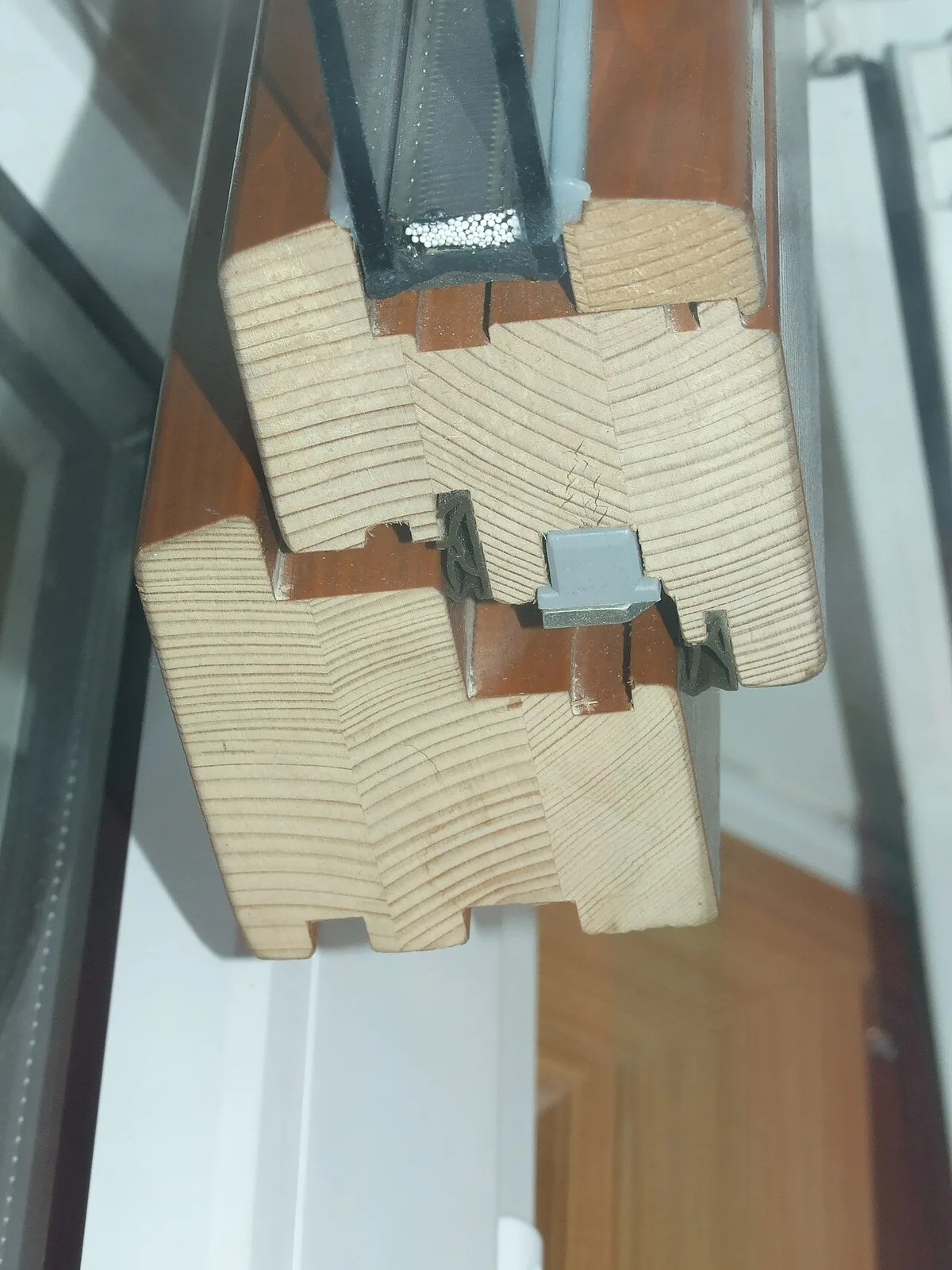
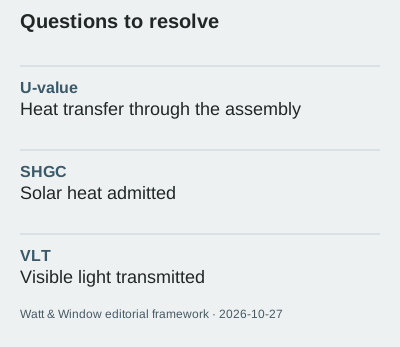
U-value concerns heat transfer through an assembly; SHGC concerns solar heat admitted; VLT concerns visible light transmitted. Those short definitions do not decide which product is right for a room. Check whether the published result describes glass alone, a film-and-glass combination or a complete window. The cutaway photograph illustrates why the frame and glazing cannot simply be treated as the same object. Do not compare numbers from unlike assemblies as if they were controlled alternatives. Retain the document version and any notes that explain the tested or modelled configuration.
Practise the percentage distinction
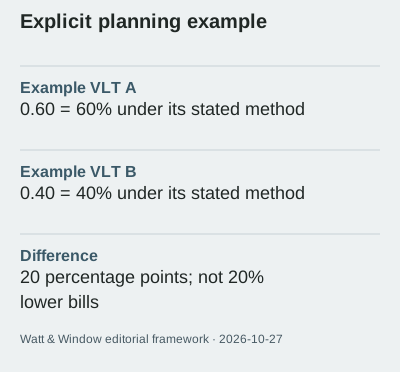
Consider invented VLT values of 0.60 and 0.40, used only to explain arithmetic. Expressed as percentages, these are 60% and 40%. The difference is 20 percentage points. Relative to the first value, the second is about 33.3% lower. Neither calculation describes a reduction in a household electricity bill. This distinction matters whenever an advertisement uses the word less without identifying the starting value. Copy the complete claim, including its denominator, into your notes. Do not quietly replace a light-transmission comparison with a cooling-energy comparison because both happen to use percentages.
Connect the question to the room
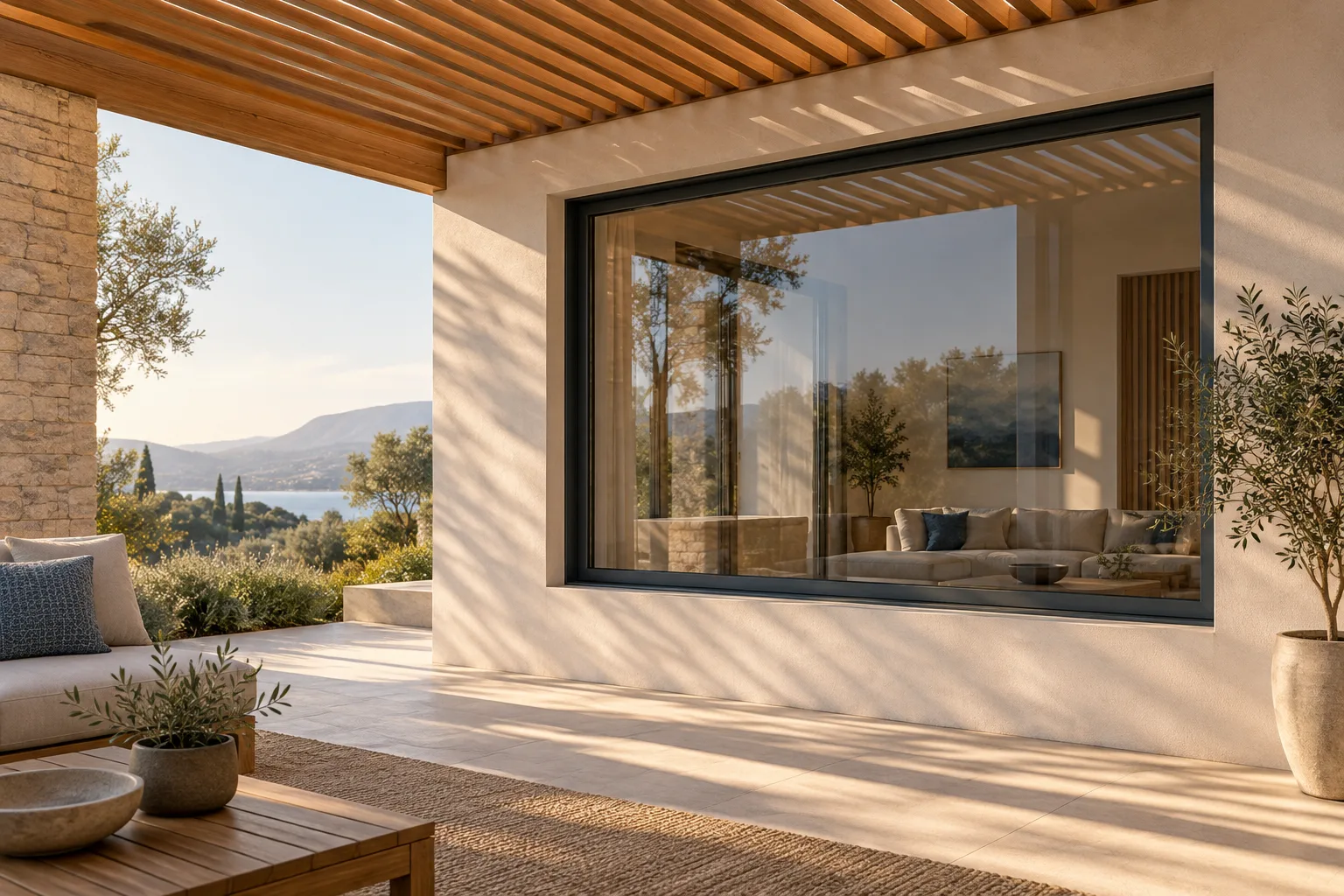
Describe why daylight, glare or seasonal solar exposure matters in the particular room. A study used during the day may have different priorities from a room mainly occupied after dark. This is a way to explain preferences, not a prescription for a target rating. Include existing shading and window coverings in the brief. The external light-shelf photograph shows that something outside the glass can also influence the setting. Ask an appropriately qualified adviser how the complete proposal fits the building, its orientation and the intended use of the room.

Keep uncertainty on the comparison sheet
Add a final column called assessment still needed. It can include glass identification, compatibility, appearance and any missing whole-window data. A supplier who gives a precise answer to a narrow question has not necessarily answered the broader design question. Request written clarification rather than treating a rating as a warranty. Repeated panes in a facade can also differ in size or exposure; a photograph alone does not establish that every pane has identical construction. Keep the pane identifiers linked to the documents rather than letting one number stand for every window.

Make a decision that can be explained
Our review date is 2026-10-27. Save dated source documents with your comparison so that a later revision does not silently change the evidence. The useful outcome is a shortlist with known differences and explicit unanswered questions. It need not produce a universal best value. When asking for advice, send the original rating sheet alongside your own notes so the adviser can see its scope. This guide explains terms and a hypothetical calculation; it does not verify a particular film, certify a window or predict energy savings.